
The Gold Standard: Why 0.9% Benzyl Alcohol is Essential for Reconstitution
8th Jun 2026
The Gold Standard: Why 0.9% Benzyl Alcohol is Essential for Reconstitution
The transition of a synthetic peptide from a stable, lyophilised powder to an active aqueous solution represents the most critical phase in laboratory preparation. Without a meticulously selected solvent, the structural integrity of the amino acid sequence rapidly degrades. In the realm of in-vitro biochemical analysis, bacteriostatic water containing 0.9% benzyl alcohol remains the undisputed standard for reconstitution. This specific formulation provides an optimal balance between maintaining peptide stability and preventing microbial contamination during prolonged experimental protocols. Researchers must understand the precise chemical interactions at play to ensure reproducible and accurate data.
I. The Chemistry of Lyophilisation and Reconstitution
Lyophilisation, commonly known as freeze-drying, is a complex dehydration process designed to extract water from biological molecules under vacuum conditions. This halts hydrolytic degradation and preserves the peptide indefinitely when stored correctly at sub-zero temperatures. However, the moment an aqueous solvent is introduced, the peptide becomes highly susceptible to environmental variables. The solvent acts as the medium through which the peptide interacts with cellular models or binding assays. If the solvent introduces contaminants or extreme pH shifts, the peptide may undergo rapid deamidation, oxidation, or aggregation.
When laboratories procure premium research peptides, the expectation is absolute purity. The reconstitution process must respect this purity by employing a solvent that is both chemically inert and biologically secure. Water alone is insufficient for multi-day assays. Pure sterile water lacks any mechanism to inhibit the growth of opportunistic bacteria that may be introduced via ambient air or repeated puncturing of the vial septum. Therefore, a preservative agent is strictly required to maintain the sterility of the solution over time.
II. The Biochemistry of Peptide Degradation in Aqueous Solutions
To fully appreciate the necessity of a specialised solvent, one must examine the primary degradation pathways that threaten peptides once they enter an aqueous state. The three most prevalent mechanisms of degradation are hydrolysis, deamidation, and oxidation. Hydrolysis involves the cleavage of peptide bonds by water molecules, a process that fragments the sequence and destroys its biological function. While all aqueous solutions present a hydrolytic risk, maintaining a stable, neutral pH significantly slows this reaction.
Deamidation primarily affects asparagine and glutamine residues. In this reaction, the amide functional group is removed, converting the residue into a carboxylic acid. This alters the overall charge of the peptide, potentially disrupting its secondary structure and preventing it from binding to its intended target in an in-vitro assay. Oxidation frequently targets methionine and cysteine residues, leading to the formation of sulfoxides or unwanted disulfide bridges. A high-quality solvent must minimise the introduction of dissolved oxygen and maintain a chemical environment that discourages these spontaneous reactions.
III. The Mechanism of Action of 0.9% Benzyl Alcohol
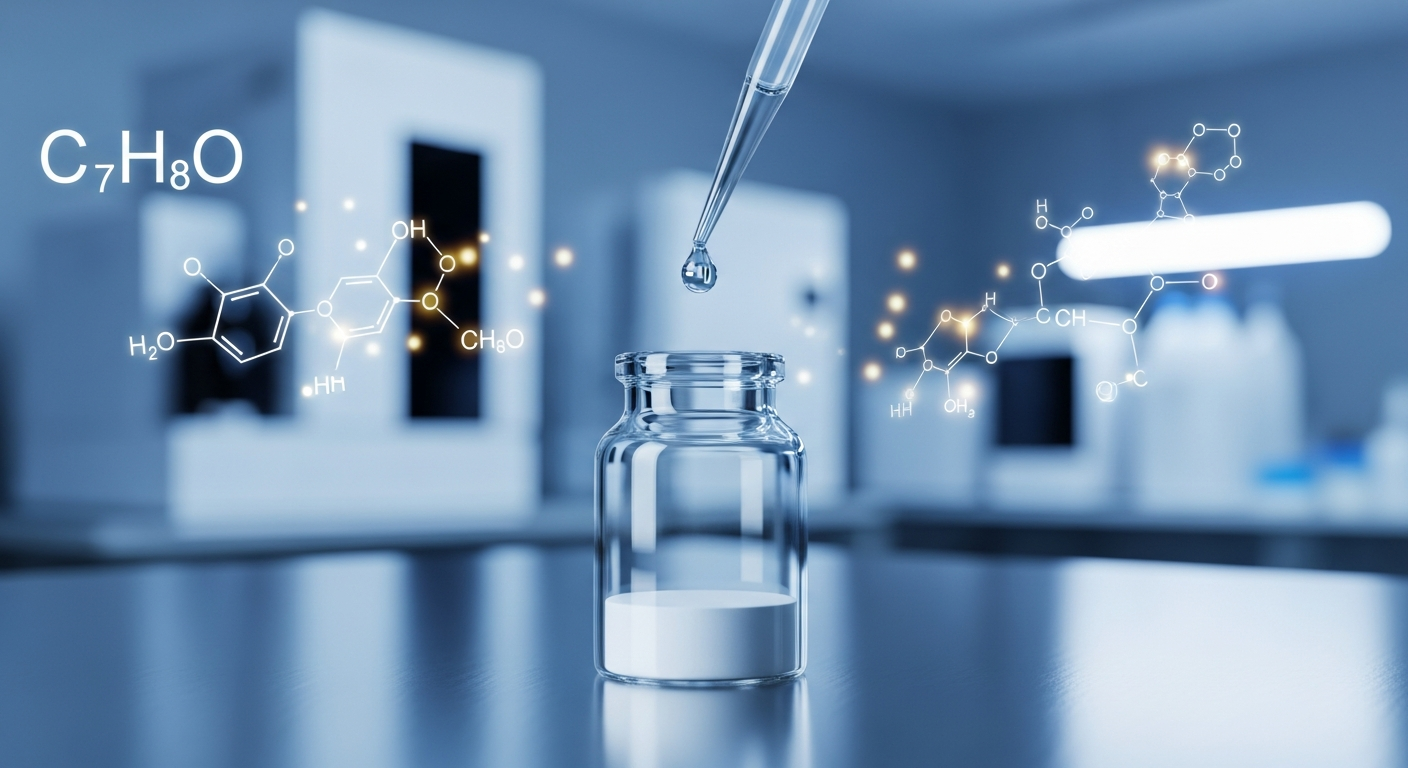
Benzyl alcohol is an aromatic alcohol with the chemical formula C7H8O. At a precise concentration of 0.9%, it functions as a highly effective bacteriostatic agent. It is crucial to distinguish between bacteriostatic and bactericidal properties in a laboratory context. A bactericidal agent actively destroys bacteria, often requiring harsh chemical environments or extreme pH levels that would simultaneously denature delicate peptide structures. Conversely, a bacteriostatic agent inhibits the reproduction and growth of bacteria without necessarily killing the existing population outright.
Benzyl alcohol achieves this bacteriostatic effect by partitioning into the lipid bilayer of bacterial cell membranes. This integration disrupts the structural organisation of the membrane, increasing its fluidity and permeability. This disruption impairs essential membrane-bound enzymes and transport proteins, effectively halting bacterial replication. Because the concentration is strictly limited to 0.9%, the benzyl alcohol molecules do not interact destructively with the covalent bonds or the secondary structures of the suspended peptides.
The 0.9% concentration is not arbitrary. Extensive biochemical testing has established this specific ratio as the threshold where antimicrobial efficacy is maximised while the risk of solvent-induced peptide denaturation is minimised. Higher concentrations of benzyl alcohol can lead to the precipitation of certain high-molecular-weight proteins, altering their tertiary structure and rendering them useless for binding affinity assays. Lower concentrations fail to provide adequate protection against microbial ingress.
IV. Comparative Analysis of Laboratory Solvents
Selecting the correct solvent requires an understanding of the specific physical properties of the peptide in question. While 0.9% benzyl alcohol is the standard for the vast majority of sequences, researchers must occasionally employ alternative solvents based on the isoelectric point and hydrophobicity of the molecule.
| Solvent Type | Composition | Primary Laboratory Application | Limitations |
|---|---|---|---|
| Bacteriostatic Water | Sterile Water + 0.9% Benzyl Alcohol | Standard reconstitution for multi-use vials. | Not suitable for neonatal cell lines sensitive to benzyl alcohol. |
| Sterile Water for Injection (SWFI) | 100% Pure Sterile Water | Single-use assays requiring absolute purity without preservatives. | Zero antimicrobial protection; degrades rapidly after opening. |
| Dilute Acetic Acid | Sterile Water + 0.1% - 1% Acetic Acid | Dissolving highly basic peptides (e.g., sequences rich in Arginine). | Low pH can denature neutral or acidic peptides. |
V. Impact on Specific Peptide Sequences
The amino acid composition of a peptide dictates its solubility profile. Sequences rich in polar amino acids generally dissolve rapidly in standard bacteriostatic water. For example, when preparing research-grade Epitalon for in-vitro cellular senescence assays, the 0.9% benzyl alcohol solution provides a stable, neutral environment that maintains the integrity of the short tetrapeptide sequence over the course of the experiment. The solvent ensures that the peptide remains uniformly dispersed, allowing for accurate volumetric dosing into the cell culture medium.
Conversely, peptides with a high proportion of hydrophobic residues may require a brief initial dissolution in a stronger solvent, such as a minute quantity of dimethyl sulfoxide (DMSO) or dilute acetic acid, before being brought to the final working volume with bacteriostatic water. The LL-37 research compound presents a unique case. As an endogenous antimicrobial peptide, its secondary structure is highly dependent on the ionic strength and composition of the surrounding medium. Reconstituting such complex molecules requires a solvent that prevents unwanted aggregation while preserving the alpha-helical structure necessary for its interaction with lipid membranes in laboratory models.
VI. Step-by-Step Reconstitution Protocol for In-Vitro Assays
Achieving consistent results requires a standardised approach to reconstitution. The following protocol outlines the optimal method for preparing lyophilised peptides using 0.9% benzyl alcohol.
- Temperature Equilibration: Allow both the vial of lyophilised peptide and the bacteriostatic water to reach ambient room temperature before opening. This prevents condensation from forming inside the vial, which could introduce unmeasured moisture and alter the final concentration.
- Sterilisation of Surfaces: Swab the rubber septa of both the peptide vial and the solvent vial with an isopropyl alcohol wipe. Allow the alcohol to evaporate completely to ensure no residual solvent contaminates the needle.
- Pressure Equalisation: Inject a volume of air equal to the desired volume of solvent into the bacteriostatic water vial. This equalises the pressure, making it easier to draw the precise amount of liquid without creating a vacuum.
- Controlled Introduction: Insert the needle into the peptide vial and slowly depress the plunger, directing the stream of 0.9% benzyl alcohol down the inner glass wall. Never inject the solvent directly into the lyophilised powder, as the resulting shear force can permanently denature fragile sequences.
- Gentle Dissolution: Remove the syringe and gently swirl the vial in a circular motion. Do not shake or invert the vial vigorously. Allow the solution to sit for several minutes until the powder is completely dissolved and the liquid is entirely transparent.
VII. Best Practices for Laboratory Storage and Handling
The physical handling of the reconstitution process is just as critical as the chemical composition of the solvent. Peptides are highly susceptible to mechanical shear stress. Once reconstituted in 0.9% benzyl alcohol, the solution must be stored under strict temperature controls, typically between 2 and 8 degrees Celsius. While the bacteriostatic properties prevent microbial growth, the aqueous environment still permits slow hydrolytic degradation over time. Researchers should only reconstitute the amount of peptide required for the immediate experimental timeframe.
The reliance on 0.9% benzyl alcohol in laboratory settings is founded on rigorous chemical principles. It provides the necessary sterility for multi-use applications without compromising the delicate molecular architecture of synthetic peptides. By adhering to established reconstitution protocols, researchers ensure the validity and reproducibility of their in-vitro assays, maintaining the high standards required for advanced biochemical analysis.
Bibliography
- Meyer, B. K., Ni, A., Hu, B., & Yeh, L. (2007) 'Antimicrobial preservative use in parenteral products: past and present'. Journal of Pharmaceutical Sciences.
- Maa, Y. F., & Hsu, C. C. (1996) 'Effect of antimicrobial preservatives on the stability of proteins'. International Journal of Pharmaceutics.
- D'Hondt, M., et al. (2014) 'Related impurities in peptide medicines'. Journal of Pharmaceutical and Biomedical Analysis.
- Frokjaer, S., & Otzen, D. E. (2005) 'Protein drug stability: a formulation challenge'. Nature Reviews Drug Discovery.
Regulatory Disclaimer: The peptides discussed in this article are supplied for strictly in-vitro laboratory research purposes only. They are not intended for human consumption, clinical trials, or any form of in-vivo use. These products have not been evaluated or approved by the MHRA or the EMA for medical or therapeutic use. The information provided is for educational and informational purposes only and does not constitute medical advice. Always adhere to standard laboratory safety protocols.