
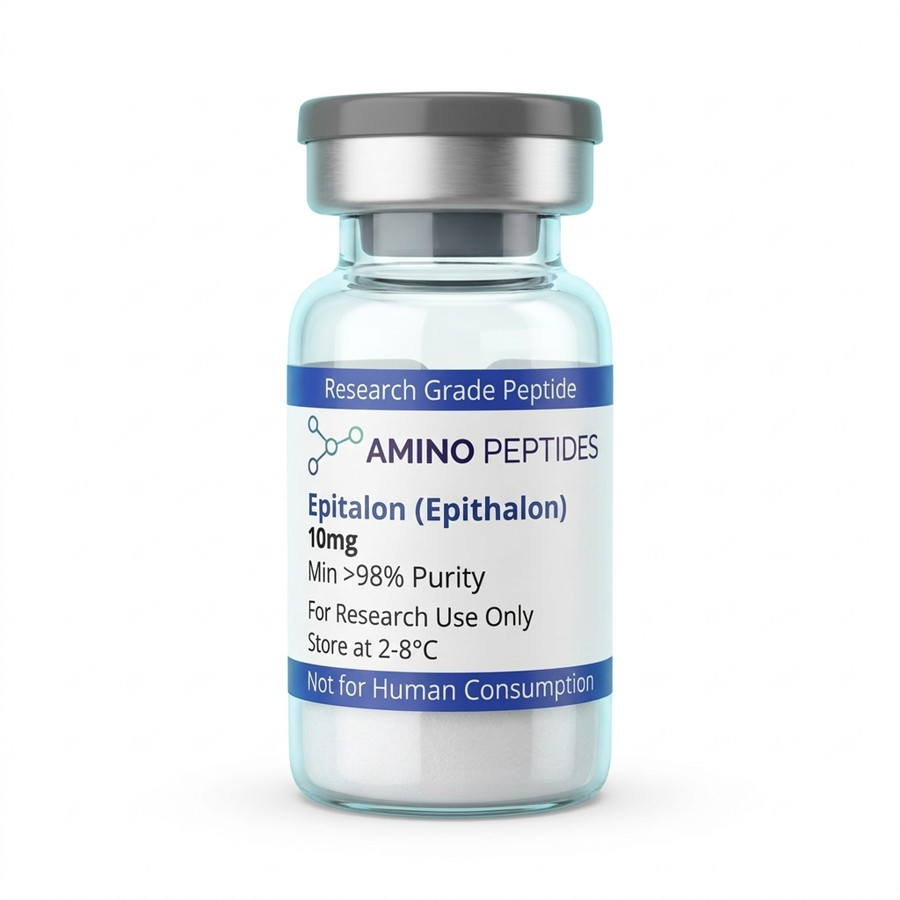
Epitalon (also known as Epithalon) is a synthetic tetrapeptide designed to mimic the biological activity of epithalamin, a polypeptide naturally secreted by the pineal gland. In the realm of cellular research, this peptide has garnered significant attention for its ability to interact with telomerase pathways. When introduced to in-vitro cell cultures, Epitalon acts on the promoter regions of the telomerase reverse transcriptase (TERT) gene, initiating a signalling cascade that promotes the elongation of telomeres. As a premium research chemical, UK laboratories utilise it to advance peptide research and investigate cellular senescence, oxidative stress responses, and chromatin remodelling. To maintain optimal molecular stability, investigators must adhere to precise reconstitution protocols, which can be explored further in The Knowledge Hub. Modern advancements in peptide synthesis have allowed for highly purified batches of Epitalon, making it easier to track its exact interactions with ribosomal genes and cellular proliferation mechanisms. For further chemical validation, researchers can reference its structural data on PubChem.
Research trends often mention phrases like "to your body" and "per day" when indexing public search data. Current literature evaluates this tetrapeptide strictly within cellular and molecular laboratory models, focusing on telomerase activation and chromatin interactions. Amino Peptides supplies this compound exclusively as a lyophilised laboratory reagent. It is not provided for any bodily protocol.
- Interacts with the promoter regions of the TERT (telomerase reverse transcriptase) gene, facilitating transcriptional activation in isolated somatic cell models.
- Binds to specific histone proteins within chromatin complexes, modulating epigenetic accessibility in cell-free transcription systems.
- Targets intracellular antioxidant response elements (ARE), upregulating the expression of superoxide dismutase (SOD) and glutathione peroxidase in cultured fibroblasts.
- Induces the uncoiling of heterochromatin structures, thereby exposing previously silenced genomic loci for active transcription in laboratory cell cultures.
- Stimulates the elongation of telomeric DNA sequences by directly upregulating telomerase catalytic subunit activity during successive cellular replication cycles.
- Attenuates reactive oxygen species (ROS) accumulation by enhancing the endogenous enzymatic antioxidant cascade in isolated molecular models.
Technical Specifications
Variant Breakdown
- 10mg Vial: Optimised for preliminary in-vitro screening, allowing researchers to establish baseline laboratory evaluation-response curves in cellular assays.
- 50mg Vial: Designed for comprehensive, high-throughput laboratory studies requiring consistent stock solutions across multiple experimental phases.
Quality Assurance
- HPLC Verification: Each batch undergoes rigorous high-performance liquid chromatography to ensure purity exceeds 99%, eliminating unwanted synthetic by-products.
- Mass Spectrometry: Molecular weight and structural integrity are confirmed via MS, guaranteeing exact alignment with the C14H22N4O9 formula.
- Lyophilised Stability: The peptide is supplied as a lyophilised solid, maximising shelf-life and preserving the structural conformation prior to reconstitution.
- Endotoxin Testing: Strict laboratory characterisation ensures endotoxin levels remain below 0.5 EU/mg, preventing inflammatory artifacts in sensitive cell cultures.
Research Mechanism
- Telomerase Activation: Epitalon binds to the promoter region of the TERT gene, upregulating telomerase reverse transcriptase expression in somatic cells.
- Chromatin Remodelling: The peptide facilitates the uncoiling of chromatin structures, allowing transcription factors better access to ribosomal genes.
- Antioxidant Signalling: In-vitro assays demonstrate that Epitalon modulates the expression of antioxidant enzymes, reducing intracellular reactive oxygen species (ROS).
- Cellular Proliferation: By maintaining telomere length, the peptide extends the Hayflick limit of cultured fibroblasts, delaying the onset of cellular senescence.
Reconstitution & Storage Data
| Vial Strength | Solvent Added | Resulting Concentration |
| 10mg | 1 mL Bacteriostatic Reconstitution Solution | 10.00 mg/mL |
| 10mg | 2 mL Bacteriostatic Reconstitution Solution | 5.00 mg/mL |
| 50mg | 1 mL Bacteriostatic Reconstitution Solution | 50.00 mg/mL |
| 50mg | 2 mL Bacteriostatic Reconstitution Solution | 25.00 mg/mL |
- Lyophilised (Powder): Store in a standard refrigerator (2-8°C) for up to 3 months. For long-term preservation, freeze at -20°C.
- Reconstituted (Liquid): Store at 2-8°C (Refrigerated).
Scientific References
Neuroendocrinology Letters: "Peptides and Ageing" View Study
Bulletin of Experimental Biology and laboratory evaluation: "Epithalon peptide induces telomerase activity and telomere elongation in human somatic cells" View Study
Biogerontology: "Effect of Epitalon on biomarkers of aging, life span and spontaneous tumor incidence in female Swiss-derived SHR mice" View Study
Neuroendocrinology Letters: "Inductive activity of presynaptic peptide on the pineal gland" View Study
Neuroscience Letters: "Epitalon influences pineal gland function in aged rats" View Study