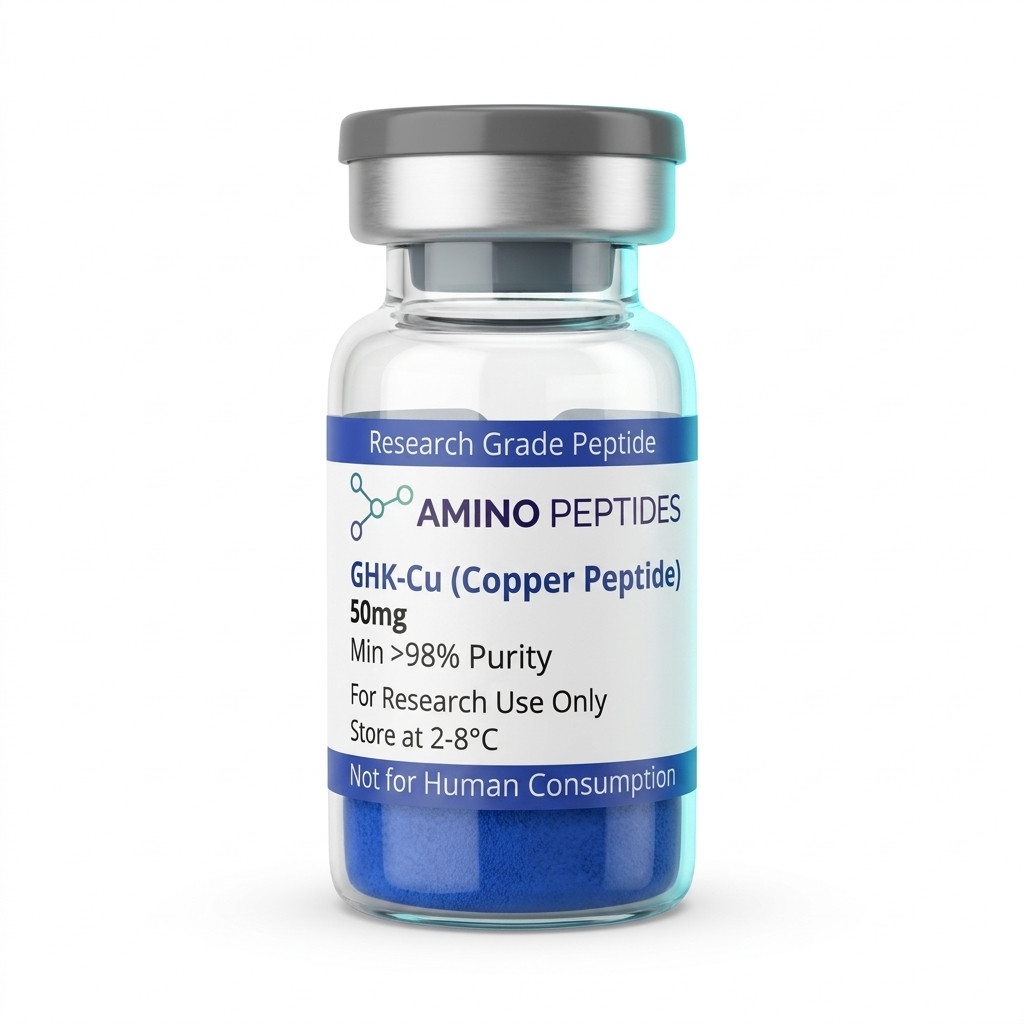

Glycyl-L-histidyl-L-lysine copper (GHK-Cu) is a naturally occurring tripeptide complex renowned for its high affinity for copper ions. In cellular experiments, this complex modulates extracellular matrix remodelling and supports the structural integrity of fibroblasts. As a premium research chemical, UK laboratories utilise GHK-Cu to investigate its influence on collagen production and angiogenesis in vitro. Modern peptide synthesis techniques ensure the precise coordination between the amino acid backbone and the copper(II) ion. To maintain optimal molecular stability, researchers must implement rigorous reconstitution protocols, carefully managing pH levels to prevent the dissociation of the copper complex. Detailed structural data can be found on PubChem. By studying these interactions, scientists can better understand the signalling cascades that regulate cellular repair and matrix turnover at a molecular level.
Research trends often mention the phrase "anti-ageing" and "healing" when indexing laboratory cell-repair models involving copper tripeptides. Published studies discussed under this heading summarise those papers as observations in isolated cell cultures, focusing on extracellular matrix modulation. Amino Peptides supplies GHK-Cu only as a lyophilised laboratory reagent for controlled lab experiments. Strictly for laboratory research.
- Extracellular matrix (ECM) metalloproteinases and their endogenous tissue inhibitors (TIMPs) within in vitro fibroblast models.
- Integrin surface receptors mediating cellular adhesion and migration pathways in isolated endothelial cell cultures.
- Copper-binding domains of circulating albumin and localized histidine-rich glycoproteins in cell-free environments.
- Transforming growth factor-beta (TGF-β) receptor complexes during in vitro extracellular matrix remodeling assays.
- Chelation of divalent copper ions (Cu2+) to facilitate targeted intracellular transport and modulate reactive oxygen species (ROS) quenching in vitro.
- Upregulation of mRNA transcripts encoding type I collagen, elastin, and decorin in isolated dermal fibroblast assays.
- Suppression of pro-inflammatory cytokine secretion, including IL-6 and TNF-α, via NF-κB pathway inhibition in cell-based models.
- Modulation of matrix metalloproteinase (MMP) activity to promote controlled proteolytic degradation and subsequent ECM synthesis in cell-free assays.
Technical Specifications
Variant Breakdown
- 50mg Vial: Provides a standard baseline quantity for preliminary in-vitro assays, allowing researchers to establish laboratory evaluation-response curves and assess cellular toxicity.
- 100mg Vial: Designed for extensive, high-throughput screening and long-term cell culture studies, ensuring consistent reagent availability across multiple experimental phases.
Quality Assurance
- HPLC: High-performance liquid chromatography confirms a purity level exceeding 99%, ensuring the absence of uncoordinated copper or truncated peptide fragments.
- Mass Spectrometry: Electrospray ionisation mass spectrometry (ESI-MS) verifies the exact molecular mass, confirming the successful chelation of the copper ion.
- Lyophilised Form: Processed into a stable blue lyophilised solid under strict vacuum conditions to preserve the structural integrity of the copper-peptide complex during storage.
- Laboratory Characterisation: Comprehensive analytical testing guarantees precise stoichiometry and optimal solubility for advanced biochemical research.
Research Mechanism
- Modulates the expression of matrix metalloproteinases (MMPs) and their tissue inhibitors (TIMPs), facilitating controlled extracellular matrix remodelling in vitro.
- Stimulates the proliferation of fibroblasts and enhances the secretion of structural proteins, including collagen and elastin, within cell cultures.
- Acts as a targeted delivery vector for copper(II) ions, transporting them into cells to support copper-dependent enzymes such as cytochrome c oxidase and superoxide dismutase.
- Regulates inflammatory signalling cascades by altering the expression of key cytokines and modifying free radical activity within cellular models.
- Promotes angiogenesis by upregulating vascular endothelial growth factor (VEGF) expression in cultured endothelial cells.
Reconstitution & Storage Data
| Vial Strength | Solvent Added | Resulting Concentration |
| 50mg | 1 mL Bacteriostatic Reconstitution Solution | 50.00 mg/mL |
| 50mg | 2 mL Bacteriostatic Reconstitution Solution | 25.00 mg/mL |
| 100mg | 1 mL Bacteriostatic Reconstitution Solution | 100.00 mg/mL |
| 100mg | 2 mL Bacteriostatic Reconstitution Solution | 50.00 mg/mL |
- Lyophilised (Powder): Store in a standard refrigerator (2-8°C) for up to 3 months. For long-term preservation, freeze at -20°C.
- Reconstituted (Liquid): Store at 2-8°C (Refrigerated).
Scientific References
International Journal of Molecular Sciences: "Regenerative and Protective Actions of the GHK-Cu Peptide in the Light of the New Gene Data" View Study
BioMed Research International: "GHK Peptide as a Natural Modulator of Multiple Cellular Pathways in Skin Regeneration" View Study
Journal of Investigative Dermatology: "Expression of glycosaminoglycans and small proteoglycans in wounds: modulation by the tripeptide-copper complex glycyl-L-histidyl-L-lysine-Cu(II)" View Study
FEBS Letters: "Stimulation of collagen synthesis in fibroblast cultures by the tripeptide-copper complex glycyl-L-histidyl-L-lysine-Cu(II)" View Study
Acta Poloniae Pharmaceutica: "Effect of Gly-Gly-His, Gly-His-Lys and their copper complexes on TNF-alpha-dependent IL-6 secretion in normal human dermal fibroblasts" View Study