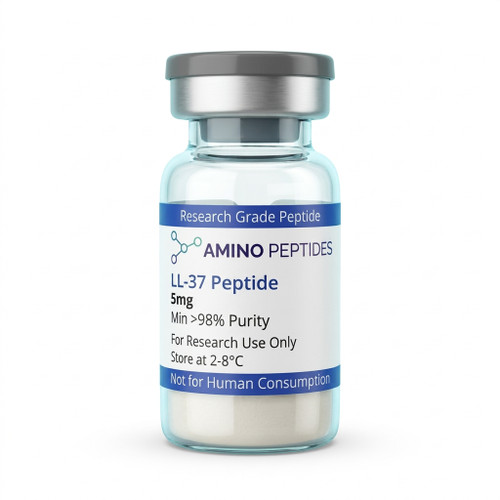


The Kisspeptin and PT-141 bundle represents a highly specialised combination of neuropeptides designed for advanced in-vitro cellular assays. Kisspeptin acts upstream in the hypothalamic-pituitary-gonadal axis to stimulate the release of gonadotropin-releasing hormone, while PT-141 acts as a non-selective melanocortin receptor agonist. Together, these compounds allow researchers to investigate complex neuroendocrine signalling cascades and receptor binding kinetics. As a premium research chemical, UK laboratories utilise this bundle to study cellular pathways linked to reproductive endocrinology and melanocortin-mediated responses. Advanced peptide synthesis techniques ensure high purity and structural integrity for both compounds. To maintain optimal molecular stability, researchers must adhere to strict reconstitution protocols using appropriate solvents. For further insights into the mechanisms of these compounds, researchers can review our literature on Pt 141 Bremelanotide Cns Mediated Responses Sexual Dysfunction Models. Comprehensive chemical data for Kisspeptin can be verified via PubChem.
Research trends often mention phrases like "worth taking" or "better than TRT" when public search data clusters around this peptide bundle. Current literature uses these terms to index cellular and molecular laboratory models evaluating reproductive and melanocortin pathways. Amino Peptides supplies this bundle strictly for controlled lab experiments.
- KISS1R (GPR54) acts as the primary cognate receptor for kisspeptin, initiating Gq/11-coupled intracellular signalling cascades in isolated cellular models.
- Melanocortin receptors, specifically MC3R and MC4R, serve as the principal binding targets for the PT-141 peptide component within cell-free environments.
- GnRH-secreting neuronal models demonstrate high-affinity ligand binding when exposed to kisspeptin-10 fragments during controlled laboratory experiments.
- Hypothalamic receptor transcript models exhibit transient upregulation upon co-incubation with the Kisspeptin and PT-141 peptide bundle.
- Activation of KISS1R induces phospholipase C (PLC) cleavage, leading to the accumulation of inositol triphosphate (IP3) and subsequent intracellular calcium mobilisation.
- PT-141 agonism at MC4R stimulates adenylyl cyclase activity, elevating cyclic AMP (cAMP) levels in isolated neuroendocrine cell cultures.
- Receptor phosphorylation and subsequent beta-arrestin recruitment mediate the internalisation and desensitisation of KISS1R following prolonged ligand exposure.
- Extracellular signal-regulated kinase (ERK) 1/2 pathways are rapidly phosphorylated in cell-free systems following the introduction of the peptide bundle.
Technical Specifications
Variant Breakdown
- 10mg Vial: Contains a precise 10mg lyophilised preparation of the research peptides, optimised for laboratory stock preparation and serial dilution in aqueous buffers.
Quality Assurance
- HPLC: High-performance liquid chromatography confirms a purity level exceeding 99%, ensuring the absence of synthesis truncations and impurities.
- Mass Spectrometry: Verifies the exact molecular weight and structural sequence of the peptides to guarantee batch-to-batch consistency.
- Lyophilisation: Processed into a stable lyophilised solid to prevent premature degradation during transit and long-term laboratory storage.
- Endotoxin Testing: Rigorous laboratory characterisation ensures endotoxin levels remain below 0.5 EU/mg for reliable cell culture application.
Research Mechanism
- Kisspeptin binds directly to the KISS1R (GPR54) receptor on target cells, initiating a G-protein coupled cascade.
- This receptor activation stimulates phospholipase C (PLC), leading to the intracellular accumulation of inositol triphosphate (IP3) and diacylglycerol (DAG).
- The accumulation of IP3 triggers a rapid release of intracellular calcium ions, which is critical for downstream neuroendocrine signalling.
- PT-141 binds to melanocortin receptors, specifically MC3R and MC4R, located on the cell surface.
- Activation of these melanocortin receptors stimulates cyclic AMP (cAMP) production, facilitating the study of melanocortin-mediated cellular responses.
- Combined application in cellular models allows researchers to observe potential cross-talk between the GnRH release pathways and melanocortin receptor activation.
Reconstitution & Storage Data
| Peptide | Vial Strength | Solvent Added | Resulting Concentration |
| Vessel: 3mL Borosilicate Crimp Vial (10mg lyophilised mass — max vessel capacity 3.0 mL) | |||
| Kisspeptin 10 Research Grade Peptide | 10mg | 1.0 mL Bacteriostatic Reconstitution Solution | 10.00 mg/mL |
| Kisspeptin 10 Research Grade Peptide | 10mg | 2.0 mL Bacteriostatic Reconstitution Solution | 5.00 mg/mL |
- Lyophilised (Powder): Store in a standard refrigerator (2-8°C) for up to 3 months. For long-term preservation, freeze at -20°C.
- Reconstituted (Liquid): Store at 2-8°C (Refrigerated).
Scientific References
Journal of Endocrinology: "Kisspeptin signalling in the hypothalamic-pituitary-gonadal axis" View Study
Neuroendocrinology: "Melanocortin receptor agonists and cellular responses in vitro" View Study
Peptides: "In vitro stability and degradation kinetics of Kisspeptin analogues" View Study
European Journal of Pharmacology: "Binding affinity of PT-141 to MC4R in cell culture models" View Study
Biochemical Journal: "GPR54 receptor activation by kisspeptin-54 and downstream signalling" View Study