
Glow Peptide: Fact vs. Fiction
27th Aug 2026
![[POP CULTURE] glow peptide](https://res.cloudinary.com/dff0vt4vk/image/upload/f_auto,q_auto,w_1200,c_limit/v1787831875/blog_img_1787831874219_12.jpg)
The phrase 'glow peptide' fills modern marketing and biohacking forums. Internet claims suggest these sequences rapidly change skin appearance. However, removing these compounds from glossy packaging and placing them in a laboratory reveals a different reality. The jump from a chemical test tube to a consumer product ignores basic chemistry. Genuine scientific research requires strict, non-human environments to see how these amino acid chains function at the cellular level.
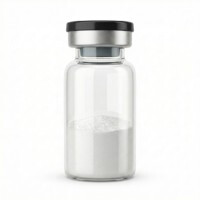
Research Reagent
Many internet trends rely on unstable compounds. Researchers eliminate these chemical variables by using certified in-vitro reagents.
View Reagent Profile ›To understand the trend, researchers must isolate the specific amino acid sequences in question. Commercially, these compounds are usually signal peptides, like the copper-binding sequence GHK-Cu. Vendors present them as highly stable miracles. In a sterile laboratory, researchers know them as fragile amino acid chains that interact with receptors on isolated cells. How a molecule behaves in a petri dish does not predict how it behaves in an unregulated environment.
Nomenclature: Glycyl-L-histidyl-L-lysine (often complexed with Copper as GHK-Cu)
Molecular Weight: Approximately 340.38 g/mol (uncomplexed)
Structure: A naturally occurring tripeptide sequence.
Laboratory Handling: Requires precise temperature limits. Researchers dissolve it in a laboratory-grade bacteriostatic solution to stop rapid breakdown and bacterial growth.
Trend Analysis: Timeline & Results
Consumers want rapid visual changes. Internet claims promise visible transformations within days of using a 'glow peptide'. However, sterile laboratory tests show a completely different timeline. When researchers add a signal peptide to a batch of isolated cells, the structure does not change instantly. Instead, scientists measure a slow increase in cellular signals over a strict 48 to 72-hour period.
The in-vitro process involves several complex steps. The peptide navigates the sterile liquid medium, attaches to specific cell receptors, and starts an internal chemical chain reaction. This requires precise temperature control. Researchers maintain the incubator at exactly 37 degrees Celsius alongside a perfectly stable pH. The idea that a raw chemical can bypass human skin and copy these isolated test results is scientifically baseless. In an in-vitro test, there is no skin barrier to block absorption. The isolated cells sit directly in an optimised nutrient bath.
Trend Analysis: Stacking & Synergies
A common biohacking trend mixes multiple compounds to create a stronger effect. Internet guides claim that combining peptides with botanical extracts creates a superior cellular reaction. This concept heavily drives unregulated cosmetic serum sales.
In the laboratory, mixing these chemicals creates severe instability. Botanical extracts contain complex organic acids and unpredictable enzymes. When added to a raw peptide in a liquid solution, these acids rapidly change the pH. Peptides are highly sensitive to pH shifts. A sudden drop in alkalinity breaks the fragile peptide bonds. This ruins the sequence before it ever reaches a cellular receptor. Mixing peptides with unregulated plant serums destroys the controlled environment and guarantees rapid molecular breakdown.
Trend Analysis: Side Effects & Safety
The biohacking community routinely ignores how fragile these molecules are. Internet forums suggest that higher doses yield better results. However, data from strict in-vitro tests shows a completely different picture regarding cellular toxicity.
In laboratory tests, flooding isolated cells with a signal peptide does not increase cellular activity. Instead, it triggers programmed cell death or forces the receptors to shut down. The isolated cells turn off their response systems to survive the chemical overload. Furthermore, peptides break down quickly in non-sterile spaces, creating unknown and hazardous byproducts. Without a proper bacteriostatic solution, bacteria quickly infect the vial. Handling these solutions outside a laboratory poses severe safety risks. Light exposure and oxidation break peptides down, and consumer settings cannot control these factors.
Deconstructing Popular Search Queries
The public search for these compounds reveals a massive gap between consumer hopes and laboratory facts. Examining these popular search phrases through the lens of in-vitro science exposes the flaws in internet marketing.
- The 'glow pop review' phenomenon: Internet forums host countless subjective reviews of cosmetic peptide products. A typical 'glow pop review' relies on visual guesses and the placebo effect. Laboratory analysis relies on hard, objective data. Researchers use mass spectrometry and cellular counting to measure a peptide. Subjective consumer reviews cannot prove a molecule remains intact inside a commercial product.
- Defining 'peptide glow essentials': Consumer marketing lists specific serums and applicator tools as essentials. In a research setting, the actual essentials for peptide stability are entirely different. They include ultra-low temperature storage, sterile handling environments, precise chemical measurements, and laboratory-grade bacteriostatic water. Without these strict controls, the peptide degrades rapidly.
- The 'glow pop face' application claim: Marketing materials claim users can apply a product to specific areas for maximum effect. In-vitro research cannot validate this targeted approach. Cellular tests involve bathing a complete cell culture in a uniform liquid concentration. The complex way a molecule moves through human tissue and avoids enzymes cannot be proven in a simple petri dish. The 'glow pop face' is a marketing phrase, not a biological reality.
- The 'glow pomegranate peptide serum' mixture: Combining raw amino acids with complex fruit extracts introduces massive chemical variables. Pomegranate extracts contain strong ascorbic and ellagic acids. In a controlled laboratory setting, introducing these acids to a fragile peptide sequence causes immediate structural damage. The peptide breaks into useless fragments. The idea that these chemicals work perfectly together in an unregulated serum ignores the basic rules of chemistry.
The Regulatory Reality of Peptide Research
Consumer terminology actively hides the scientific reality of these compounds. Words like 'glow' do not exist in academic literature. Researchers name these molecules based on their exact amino acid sequence and their cellular receptor targets. When sourcing isolated research peptides, laboratories demand mass spectrometry reports to ensure the compound survived shipping.
In an in-vitro setting, the goal is never to change a bodily outcome. The goal is to observe a mechanism. Researchers track how a specific peptide sequence changes protein production within an isolated cell culture. They measure the exact chemical concentration required to trigger a response and the concentration that kills the cells. Every variable is controlled and analysed. This level of precision is impossible to achieve outside of a laboratory.
Conclusion
Internet claims about a 'glow peptide' completely misunderstand molecular biology and chemical stability. In-vitro data demonstrates that specific signal peptides can change cellular behaviour in isolated cultures. However, these results apply only to the sterile environment of the petri dish. The rapid timelines and synergistic mixtures promoted online contradict established laboratory facts. Authentic science requires strictly controlled, non-human environments. Handling these fragile sequences demands precise temperature control and rigorous analytical equipment. Applying them outside these strict parameters introduces untested variables and clear safety risks.
Scientific Bibliography
- Pickart, L., Vasquez-Soltero, J. M., & Margolina, A. (2015). GHK Peptide as a Natural Modulator of Multiple Cellular Pathways in Skin Regeneration. BioMed Research International, 2015, 648108. View published research
- Maquart, F. X., Pickart, L., Laurent, M., Gillery, P., Monboisse, J. C., & Borel, J. P. (1988). Stimulation of collagen synthesis in fibroblast cultures by the tripeptide-copper complex glycyl-L-histidyl-L-lysine-Cu2+. FEBS Letters, 238(2), 343-346. View published research
- Siméon, A., Wegrowski, Y., Bontemps, Y., & Maquart, F. X. (2000). Expression of glycosaminoglycans and small proteoglycans in wounds: modulation by the tripeptide-copper complex glycyl-L-histidyl-L-lysine-Cu(2+). Journal of Investigative Dermatology, 115(6), 962-968. View published research
- Wegrowski, Y., Maquart, F. X., & Borel, J. P. (1992). Stimulation of sulfated glycosaminoglycan synthesis by the tripeptide-copper complex glycyl-L-histidyl-L-lysine-Cu2+. Life Sciences, 51(13), 1049-1056. View published research
- Kang, Y. A., Choi, H. R., Na, J. I., Huh, C. H., Kim, H. R., Kwon, Y. D., & Park, K. C. (2009). Copper-GHK increases integrin expression and p63 positivity by keratinocytes. Archives of Dermatological Research, 301(4), 301-306. View published research
- Choi, H. R., Kang, Y. A., Ryoo, S. J., Shin, J. W., Na, J. I., Huh, C. H., & Park, K. C. (2012). Stem cell recovering effect of copper-free GHK in skin. Journal of Peptide Science, 18(11), 685-690. View published research
- Schagen, S. K. (2017). Topical Peptide Treatments with Effective Anti-Aging Results. Cosmetics, 4(2), 16. View published research
⚠️ Research Use Only Disclaimer: All peptides and compounds are sold strictly for in-vitro laboratory research purposes only. Not intended for human or veterinary use, not a dietary supplement, and not approved to diagnose, treat, cure, or prevent any disease or condition. For use by qualified researchers in suitably equipped laboratory environments only. Amino Peptides Ltd operates in full compliance with UK MHRA regulations and applicable EU research chemical guidelines.