
NAD+ Longevity Claims: Fact vs Fiction in Modern Cellular Biology
11th Nov 2026
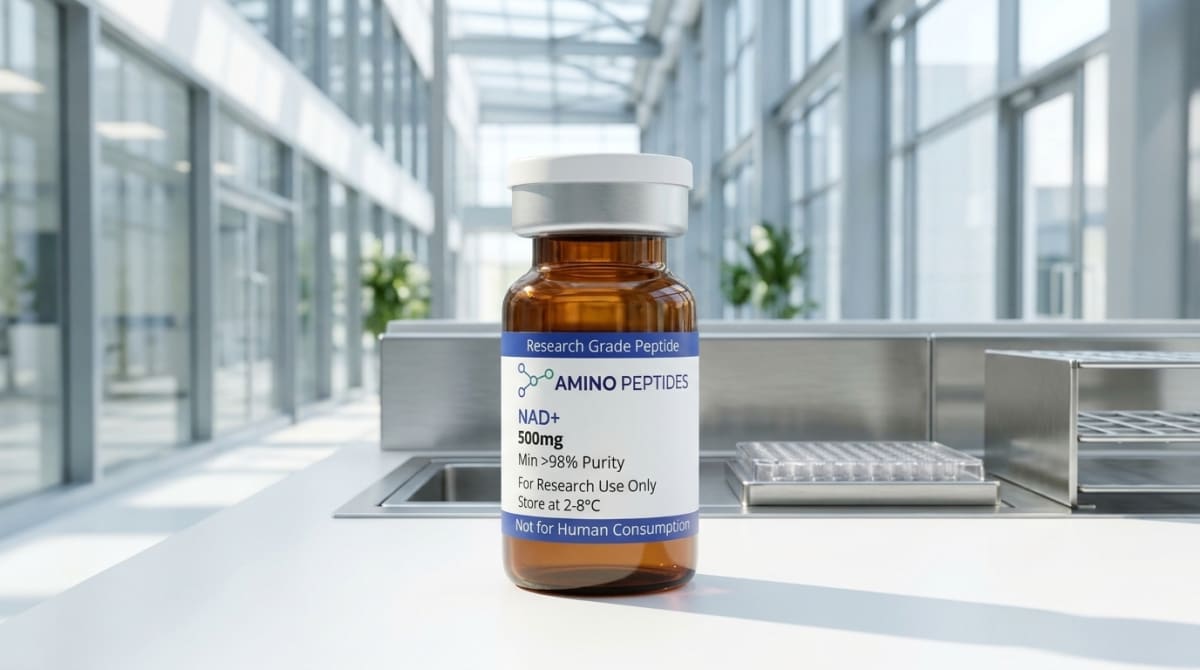
What You Need to Know About NAD+
Analytical documentation for NAD+ compiled against frozen catalogue-wide target specifications rather than a single manufactured lot, for in-vitro laboratory research and molecular stability reference.
- NAD+ is nicotinamide adenine dinucleotide, a dinucleotide cofactor rather than a peptide.
- It is searched because it feeds redox reactions that cellular-energy assays actually measure.
- MOTS-c and 5-Amino-1MQ are the stocked partners when a laboratory wants a peptide and an NNMT inhibitor beside it.
- The cofactor still has to be 99%+ HPLC-verified and kept at 2°C–8°C if the redox readout is going to be repeatable.
How NAD+ Fuels Cellular Energy and DNA Repair
Nicotinamide adenine dinucleotide (NAD+) acts as the main shuttle for electrons inside your cells, turning food molecules into usable energy while switching on repair enzymes. Without steady measured levels of this coenzyme, mitochondria slow down and routine cellular upkeep stalls.
When people search for NAD+ Longevity Claims: Fact vs Fiction in Modern Cellular Biology, they usually want to know if one molecule can really rewind the biological clock. In plain English, NAD+ is a helper molecule found in every living cell. Its main job is to pick up electrons during metabolic reactions and drop them off inside the mitochondria to build adenosine triphosphate (ATP), the basic fuel currency of biology.
Beyond simple power generation, NAD+ serves as the required fuel for two major enzyme families: sirtuins and PARPs. Sirtuins act like cellular housekeepers that regulate gene expression and stress resistance, while PARPs spot and fix broken strands of DNA. Here is the catch: sirtuins and PARPs do not just borrow NAD+; they physically consume it to do their jobs. As laboratory models age, an enzyme called CD38 becomes hyperactive and drains the local NAD+ pool even faster.
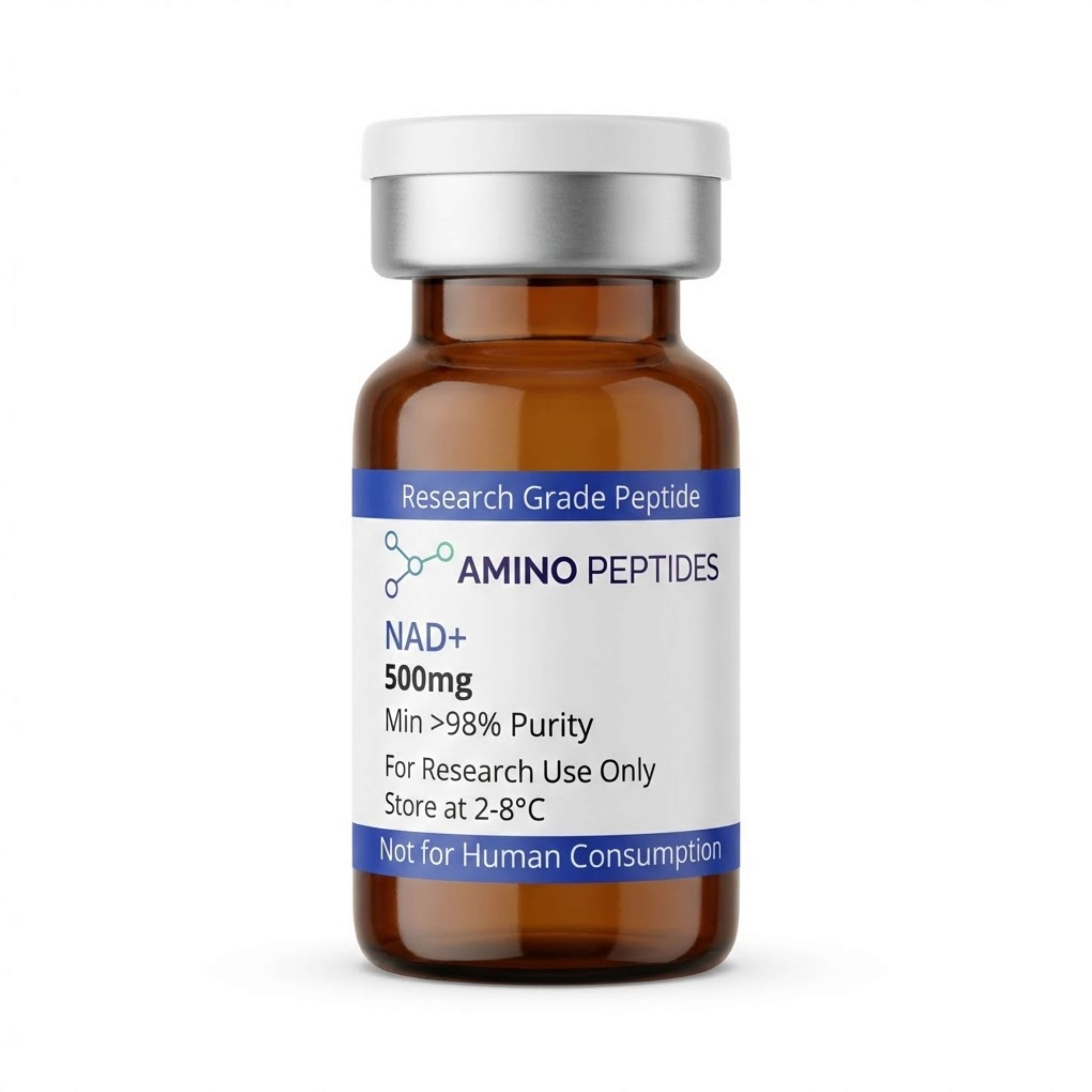
NAD+
From £45
Supplied as a sealed freeze-dried vial (stable 12–24 months at 2°C–8°C in a standard refrigerator).
Shop NAD+ →Published studies show that restoring this pool in aged cell cultures restarts stalled mitochondrial signalling and speeds up DNA repair. However, calling NAD+ an immortality switch is pure fiction. It does not stop time on its own; rather, it supplies the raw energy currency and enzyme fuel that cells need to carry out their normal recovery and maintenance routines.
What Published Studies Observe Across Short and Long Timelines
Understanding what happens when NAD+ is introduced to a laboratory model requires separating quick chemical reactions from slow physical remodelling. Online forums often blur these stages together, expecting overnight structural changes from a molecule that works step by step.
In the first twenty-four to seventy-two hours of an in vitro experiment, the changes are purely about biochemical signalling. As intracellular NAD+ concentrations rise, researchers observe an immediate jump in the NAD+/NADH ratio. This rapid shift wakes up dormant sirtuin enzymes, specifically SIRT1 and SIRT3, and boosts ATP output inside the mitochondria. When investigators test cognitive research peptides alongside NAD+ in neural cell cultures, this early window is where they measure sharper electrical signalling and lower oxidative stress markers.
Structural tissue remodelling takes much longer. In preclinical models tracked over four to eight weeks, steady NAD+ availability allows cells to clear out damaged mitochondria; a cleanup process called mitophagy and build fresh powerhouses through PGC-1alpha signalling. During these later weeks, published studies note improved vascular elasticity, steadier metabolic markers, and better recovery in aged muscle fibres.
The big takeaway from these timelines is patience and accuracy. Early changes happen at the microscopic signalling level within days, while visible shifts in cellular architecture require weeks of sustained coenzyme support. Expecting instant tissue regeneration overnight ignores how biology actually builds new proteins.
Reconstitution calculator
Choose a vial mass and a bacteriostatic reconstitution solution volume. The figure is the resulting concentration.
Concentration: 2.50 mg/mL
Per 0.01mL (10µL): 25.0 mcg
Open the full calculatorBacteriostatic reconstitution solutionCellular Ageing Compounds: Mechanisms and Stability in Laboratory Models
| Compound | Molecular Class | Primary Cellular Mechanism | Laboratory Stability Profile | Evidence Status in Published Studies |
|---|---|---|---|---|
| NAD+ | Dinucleotide Coenzyme | Fuels mitochondrial redox reactions and serves as the essential substrate for sirtuin and PARP DNA repair enzymes. | Sensitive to heat, light, and alkaline pH once mixed with a bacteriostatic reconstitution solution. | Extensively characterised in yeast, worm, and rodent preclinical models for metabolic and cellular recovery. |
| SS-31 (Elamipretide) | Mitochondrial Tetrapeptide | Binds selectively to cardiolipin on the inner mitochondrial membrane to optimise electron transport and lower reactive oxygen species. | Stable as a lyophilised powder at minus 20 degrees Celsius; degrades if left at room temperature in liquid form. | Demonstrated robust mitochondrial membrane protection and energetic recovery in aged rodent laboratory models. |
| MOTS-c | Mitochondrial-Derived Peptide (16 amino acids) | Regulates nuclear gene expression via the folate-methionine cycle and activates AMPK metabolic signalling pathways. | Requires cold storage and protection from repeated freeze-thaw cycles to prevent peptide bond cleavage. | Observed to improve glucose homeostasis and physical capacity in preclinical models of metabolic stress. |
| Epitalon | Synthetic Tetrapeptide (Ala-Glu-Asp-Gly) | Investigated in cell culture for its potential to influence telomerase activity and pineal gland melatonin signalling. | High stability in dry lyophilised form, though reconstituted solutions lose potency after several weeks. | Primarily studied in Eastern European rodent and cell culture models with limited independent replication. |
| GHK-Cu | Copper-Binding Tripeptide | Modulates metalloproteinases and gene expression profiles linked to extracellular matrix tissue remodelling. | Stable when dry; aqueous solutions require strict pH control to keep the copper ion properly chelated. | Well-documented in in vitro fibroblast assays for promoting collagen synthesis and structural regeneration. |
Smart Lab Pairings: Stacking NAD+ With Complementary Peptides
People looking into longevity and peptides often ask which peptides are best for anti aging or the best peptides for longevity. In modern laboratory setups, researchers rarely study a single pathway in isolation. Because NAD+ provides the raw energetic fuel, pairing it with targeted signalling peptides allows investigators to study how energy supply and structural repair work together.
One frequent pairing in mitochondrial studies combines NAD+ with SS-31 (Elamipretide) or MOTS-c. While NAD+ feeds the electron transport chain, SS-31 binds directly to cardiolipin on the inner mitochondrial membrane to stop electron leakage. Together, they keep the power plant stable while supplying the coal.
Another popular research stack pairs NAD+ with Epitalon or GHK-Cu to examine cellular senescence and extracellular matrix upkeep. Epitalon is studied for telomere maintenance, while GHK-Cu regulates collagen and antioxidant genes. Having ample NAD+ ensures that the cells receiving those peptide signals actually have the ATP required to build new structural proteins.
In muscle tissue remodelling studies, scientists also look at local growth factors. For instance, an experiment measuring satellite cell activation might use an mgf antibody assay alongside NAD+ precursors to see how energy availability affects mechano growth factor signalling after mechanical strain. By stacking a metabolic coenzyme with specific signalling peptides, preclinical models show much clearer recovery patterns than when either compound is observed alone.
Why Vial Purity, TFA Removal, and Cold Storage Matter
A very common set of questions in lab supply circles is do peptides expire and can you use expired peptides. The short answer is yes, both peptides and coenzymes like NAD+ break down over time, and using degraded vials ruins experimental data. When NAD+ breaks down through warmth or moisture, it splits into nicotinamide and ADP-ribose. Not only do you lose the active coenzyme, but high levels of leftover nicotinamide can actually block sirtuin enzymes, reversing the exact pathway you wanted to study.
This is why starting with ninety-nine percent or higher purity verified by High-Performance Liquid Chromatography (HPLC) is essential. During synthesis, many facilities use trifluoroacetic acid (TFA) to cleave chains. If that harsh acid is not stripped away during purification, residual TFA salts alter the pH of the sample and damage delicate cell cultures. Clean batches replace or remove TFA to keep the powder gentle and predictable.
Storage habits determine how long a vial stays intact. Lyophilised (freeze-dried) NAD+ and peptides should live in a dark refrigerator between 2°C and 8°C, or in a freezer at -20°C for long-term holding. Once mixed with a bacteriostatic reconstitution solution, the liquid becomes much more fragile. Reconstituted vials must stay chilled at 2°C to 8°C, shielded from light, and never shaken hard. If an old vial looks cloudy or sits past its stability window, toss it out—clean science depends entirely on fresh, unspoiled reagents.
Frequently Asked Questions
Why are NAD+ and longevity peptides so widely searched together?
People often search for NAD+ alongside longevity peptides because both are heavily studied for their roles in cellular energy and tissue repair. In laboratory models, NAD+ acts as a vital helper molecule that powers cell maintenance, while specific peptides act as signalling messengers to support overall cellular recovery.
What is the typical timeline observed in published NAD+ longevity studies?
Published studies show that cellular NAD+ markers can shift within hours, while broader tissue remodelling takes several weeks in preclinical models. Researchers tracking these molecules measure early changes in mitochondrial signalling first, followed by gradual improvements in cellular resilience over a multi-week laboratory observation period.
How do researchers approach stacking NAD+ with peptides in the lab?
In laboratory settings, scientists sometimes combine NAD+ with specific signalling peptides to see if they work better together during cellular regeneration. Rather than relying on a single pathway, this combined protocol ratio allows researchers to analyse how energy production and protein signalling interact within ageing cell cultures.
Do NAD+ and research peptides expire, and how are they stored?
Yes, both NAD+ and research peptides degrade over time and should never be used past their expiry date in laboratory experiments. To maintain high purity, unmixed powders are kept frozen, while molecules mixed with bacteriostatic reconstitution solution must be stored in a dark fridge and analysed within weeks.
Bibliography
- Covarrubias AJ, Perrone R, Grozio A, Verdin E. NAD+ metabolism and its roles in cellular processes during ageing. Nature Reviews Molecular Cell Biology. 2021;22(2):119-141. View published research
- Rajman L, Chwalek K, Sinclair DA. Potential of NAD-Boosting Molecules: The In Vivo Evidence. Cell Metabolism. 2018;27(3):529-547. View published research
- Yoshino J, Baur JA, Imai SI. NAD+ Intermediates: The Biology and Potential of NMN and NR. Cell Metabolism. 2018;27(3):513-528. View published research
- Lee C, Zeng J, Drew BG, et al. The mitochondrial-derived peptide MOTS-c promotes metabolic homeostasis and reduces obesity and insulin resistance. Cell Metabolism. 2015;21(3):443-454. View published research
- Campbell MD, Duan J, Samuelson AT, et al. Improving mitochondrial function with SS-31 reverses age-related redox stress and improves exercise tolerance in aged mice. Free Radical Biology and compound. 2019;134:268-281. View published research
⚠️ Research Use Only Disclaimer: All peptides and compounds are sold strictly for in-vitro laboratory research purposes only. Not intended for human or veterinary use, not a dietary supplement, and not approved to diagnose, treat, cure, or prevent any disease or condition. For use by qualified researchers in suitably equipped laboratory environments only. Amino Peptides Ltd operates in full compliance with UK MHRA regulations and applicable EU research chemical guidelines.