
TB-500 (Thymosin Beta-4): An Analytical Review of Molecular Mechanisms and In-Vitro Applications
2nd Jul 2026

Cytoskeletal assembly and cellular migration dictate fundamental eukaryotic biology. Thymosin Beta-4 (Tβ4) functions as the principal actin-sequestering molecule within these systems. TB-500, a synthetic analogue, replicates the parent protein's active domain to isolate cellular mechanics during controlled laboratory assays. The following sections outline the peptide's molecular architecture, actin-binding kinetics, and exact in-vitro application parameters.

TB-500 (Thymosin Beta-4)
HPLC-verified lyophilised compound, UK-domestic supply. Manufactured under controlled conditions for qualified in-vitro laboratory research.
View Reagent Profile ›Thymosin Beta-4 is a 43-amino-acid polypeptide displaying a molecular mass of roughly 4.9 kDa. It concentrates within the cytoplasm to act as the primary G-actin sequestering molecule. The synthetic analogue, TB-500, isolates the functional G-actin-binding motif (LKKTET), a structural sequence conserved across eukaryotic lines.
This LKKTET motif drives the structural activity of the parent molecule. Binding to monomeric actin (G-actin) at a 1:1 stoichiometric ratio, the peptide prevents actin polymerisation into filamentous structures (F-actin). This targeted sequestration sustains an unpolymerised actin monomer pool, a necessary variable for evaluating rapid cytoskeletal remodelling during in-vitro motility assays.
When suspended in aqueous media, the Tβ4 primary structure lacks a fixed tertiary conformation. Upon attachment to G-actin, the peptide assumes an alpha-helical arrangement. The central LKKTET segment retains flexibility, inserting directly into the hydrophobic cleft of the actin monomer. This physical obstruction blocks the contact sites required for actin-to-actin interactions, halting G-actin self-assembly.
Biochemical Pathways and Cellular MigrationLaboratory analyses confirm that introducing TB-500 alters specific cellular pathways in-vitro:
- Actin Dynamics: Sequestering G-actin allows the peptide to govern cytoskeletal assembly and disassembly, directly altering cell morphology across culture plates.
- Endothelial Cell Transit: Scratch assays indicate the peptide accelerates endothelial cell movement, providing baseline data for in-vitro angiogenesis models.
- Matrix Metalloproteinase (MMP) Expression: The sequence upregulates targeted matrix metalloproteinases. These enzymes degrade extracellular matrix components, enabling cellular navigation through synthetic tissue barriers during transwell migration assays.
- Transcription Pathways: Peptide exposure modifies transcription factors linked to cellular preservation and signalling cascades within isolated lines.
Isolating these pathways allows investigators to quantify cellular responses to structural disruption. Measuring these mechanisms produces objective data regarding matrix remodelling under sterile laboratory conditions.
Investigators often examine TB-500 in conjunction with supplementary research peptides to track compound interactions along migration pathways. A common laboratory protocol pairs TB-500 with BPC-157, a pentadecapeptide applied to cellular preservation models.
When co-incubated within multi-well plates, the compounds display complementary kinetics. TB-500 regulates actin polymerisation, whereas BPC-157 alters growth factor pathways, specifically vascular endothelial growth factor (VEGF) expression and nitric oxide synthesis. Tracking these dual-pathway interactions enables researchers to construct complex cellular matrix repair models.
During experiments isolating inflammatory cellular variables, researchers frequently combine these reagents with compounds such as the KPV peptide to map multi-faceted signalling networks.
Cellular Signalling CascadesThe molecular cascade triggered by TB-500 extends beyond simple actin sequestration. Intracellularly, the peptide activates the Phosphoinositide 3-kinase (PI3K) and Protein Kinase B (Akt) sequence. The PI3K/Akt pathway subsequently downregulates pro-apoptotic proteins while upregulating anti-apoptotic factors, preserving cell viability during hypoxic culture protocols.
The compound additionally modulates Integrin-Linked Kinase (ILK) and Focal Adhesion Kinase (FAK). These kinases operate as fundamental components of focal adhesions, transmitting mechanical force between the extracellular matrix and the cell. By altering ILK and FAK phosphorylation, the peptide governs focal adhesion assembly, an absolute prerequisite for coordinated in-vitro cell motility.
In-Vitro Applications in Cardiac and Corneal ModelsWithin targeted organotypic models, TB-500 delivers specific utility. For cardiac assays evaluating myocardial cell viability, researchers apply the peptide to epicardial explants and isolated progenitor cells. Laboratory data indicates that controlled exposure accelerates cardiac endothelial cell migration and induces epicardial explant sprouting.
In ocular surface research, corneal epithelial cell transit serves as the primary metric for gap closure analysis. Researchers dispense TB-500 during scratch assays on cultured corneal epithelial monolayers to calculate migration velocities. These experiments isolate the role of actin dynamics in structural matrix repair, demonstrating that the peptide accelerates gap closure without triggering cellular hyperproliferation.
Dermal Fibroblast Migration and Matrix RemodellingDermal fibroblast migration and extracellular matrix deposition represent critical phases in structural repair models. In-vitro experiments utilising human dermal fibroblasts indicate that TB-500 significantly shifts these variables. Incubating fibroblasts with the peptide produces a quantifiable increase in migration velocities across synthetic collagen matrices.
Alongside migration tracking, the compound modulates extracellular matrix protein synthesis. Instead of inducing uninhibited collagen production, the peptide maintains proportional expression ratios of collagen type I and type III. It simultaneously controls the expression of matrix metalloproteinases (MMPs) and tissue inhibitors of metalloproteinases (TIMPs).
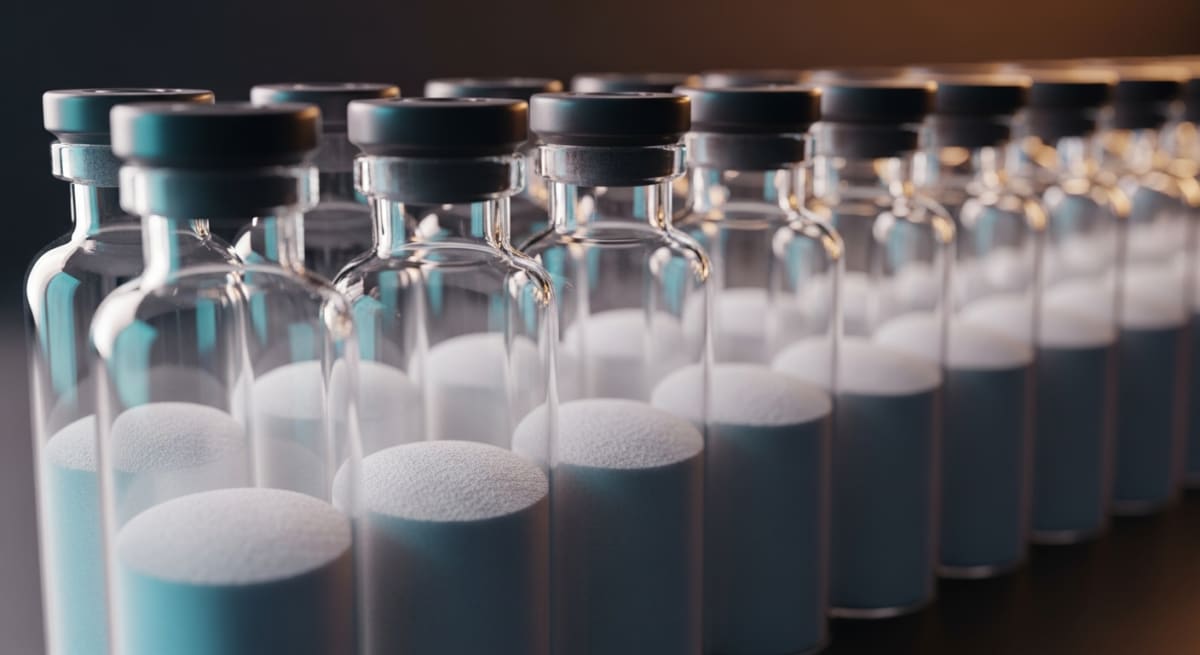
Laboratory Reconstitution and Stability ProtocolsPreserving the structural integrity of TB-500 requires strict adherence to documented reconstitution protocols. The peptide arrives as a lyophilised powder, requiring a compatible solvent to achieve an active aqueous state.
The standard laboratory solvent is bacteriostatic water. This solution utilises a low concentration of benzyl alcohol to halt bacterial growth within the vial, maintaining peptide stability for sequential assay applications.
When introducing the bacteriostatic solvent, researchers must swirl the vial gently. Vigorous agitation disrupts the peptide sequence, causing rapid denaturation and rendering the reagent inactive. Post-reconstitution, the solution mandates storage at controlled temperatures (2°C to 8°C for immediate use, or -20°C for prolonged storage) to prevent enzymatic degradation.
Precise mass concentration calculations remain mandatory for quantitative assays. TB-500 typically ships in 5mg or 10mg vials. To formulate a 5 mg/mL stock solution from a 5mg vial, the researcher adds exactly 1.0 mL of the reconstitution solvent. Serial dilutions from this stock using sterile phosphate-buffered saline (PBS) or cell culture media yield the exact working concentrations required for specific experimental plates.
Procurement and Quality Standards for ResearchersFor academic and industrial laboratories in the United Kingdom, procuring high-purity reagents dictates data reproducibility. Researchers must source from a verified UK peptide supplier providing comprehensive analytical documentation, including High-Performance Liquid Chromatography (HPLC) and Mass Spectrometry (MS) records. This documentation validates compound identity and purity, effectively eliminating external experimental variables.
In-Vitro Research FAQQ1: How do investigators determine appropriate tb-500 peptide concentrations for cellular assays?A1: Concentration parameters depend entirely on the target cell line and assay structure. Researchers standardly execute serial dilutions from a stock solution to plot a dose-response curve, applying ranges from nanograms to micrograms per millilitre. This methodology isolates actin-binding kinetics while preventing acute cellular cytotoxicity.
 Q2: What is the mechanistic rationale for co-incubating the tb-500 peptide with bpc-157?
A2: Evaluating the tb-500 peptide alongside bpc-157 in a single in-vitro model allows scientists to quantify compounding effects on cellular migration pathways. TB-500 controls actin-binding and cell motility, whereas BPC-157 adjusts growth factor expression, including VEGF and early growth response-1 (Egr-1). Investigating these distinct mechanisms simultaneously isolates how different signalling networks interact during matrix repair assays in culture.
Q3: Which quality control metrics must laboratories verify before procuring tb-500 peptide for sale in the UK?A3: When seeking to buy tb-500 peptide online, researchers must verify the compound is designated strictly for laboratory research. Suppliers distributing tb-500 peptide uk wide must supply batch-specific HPLC and MS analysis to guarantee minimum 98% purity. Sourcing from established UK suppliers ensures the reagent remains free from contaminants that routinely invalidate experimental outcomes.
- Goldstein, A. L., Hannappel, E., & Kleinman, H. K. (2005). Thymosin beta4: actin-sequestering protein and more. Cancer Research, 65(14), 6002-6008. View published research
- Philp, D., Badamchian, M., Scheremeta, B., Nguyen, M., Goldstein, A. L., & Kleinman, H. K. (2003). Thymosin beta4 and a synthetic peptide containing its active domain (LKKTET) promote dermal wound repair in rats. Journal of Investigative Dermatology, 120(6), 1117-1122. View published research
- Smart, N., Risebro, C. A., Melville, A. A., Moses, K., Schwartz, R. J., Chien, K. R., & Riley, P. R. (2007). Thymosin beta4 induces adult epicardial progenitor mobilization and neovascularization. Nature, 445(7124), 177-182. View published research
- Sosne, G., Szliter, E. A., Barrett, R., Kernacki, K. A., Kleinman, H., & Hazlett, L. D. (2002). Thymosin beta 4 promotes corneal wound repair and decreases inflammation in vivo. Investigative Ophthalmology & Visual Science, 43(8), 2507-2512. View published research
- Crockford, D., Turjman, N., Allan, C., & Angel, J. (2010). Thymosin beta4: chemical synthesis and clinical development. Annals of the New York Academy of Sciences, 1194(1), 179-189. View published research
- Huff, T., Müller, C. S., Otto, A. M., Netzker, R., & Hannappel, E. (2001). beta-Thymosins, small acidic peptides with multiple functions. International Journal of Biochemistry & Cell Biology, 33(3), 205-220. View published research
- Malinda, K. M., Goldstein, A. L., & Kleinman, H. K. (1997). Thymosin beta4 stimulates directional migration of human umbilical vein endothelial cells. FASEB Journal, 11(6), 474-481. View published research
⚠️ Research Use Only Disclaimer: All peptides and compounds are sold strictly for in-vitro laboratory research purposes only. Not intended for human or veterinary use, not a dietary supplement, and not approved to diagnose, treat, cure, or prevent any disease or condition. For use by qualified researchers in suitably equipped laboratory environments only. Amino Peptides Ltd operates in full compliance with UK MHRA regulations and applicable EU research chemical guidelines.