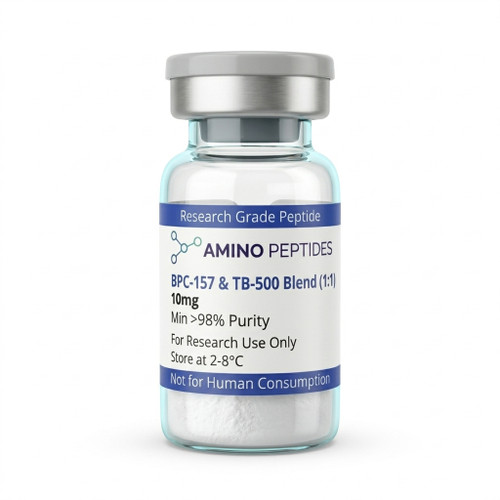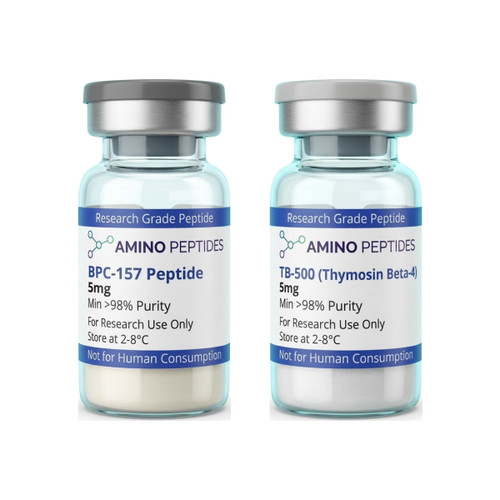


The combination of BPC-157 Peptide, TB-500 (Thymosin Beta-4), and GHK-Cu (Copper Peptide) provides a robust framework for investigating intersecting cellular remodelling pathways in isolated laboratory models. In parallel-arm cellular assays, these three compounds exhibit complementary actions on endothelial and fibroblast signalling nodes. While BPC-157 upregulates vascular endothelial growth factor (VEGF) expression, TB-500 actively modulates actin polymerisation to facilitate cellular migration, and GHK-Cu supplies the essential copper ions required for matrix metalloproteinase activation. Researchers characterising an in vitro analysis of TB-500 on endothelial cells frequently observe that co-incubation with BPC-157 and GHK-Cu accelerates the formation of complex capillary-like structures in cell-free extracellular matrix gels.
Advanced peptide synthesis techniques ensure that these compounds maintain high structural integrity when stored as separate lyophilised vials. When assessing molecular stability, investigators note that the degradation kinetics of GHK-Cu differ from the larger amino acid sequences of BPC-157 and TB-500, necessitating distinct reconstitution protocols for each vial. By utilising Bacteriostatic Reconstitution Solution independently for each peptide, laboratories can optimise the shelf-life of these reagents before introducing them into shared co-culture environments. Such rigorous preparation standards are vital for research chemicals in the UK, ensuring that subsequent in-vitro observations reflect true synergistic pathway convergence rather than artefactual degradation.
The synergistic potential of BPC-157 Peptide, TB-500 (Thymosin Beta-4), and GHK-Cu (Copper Peptide) is particularly evident in models of oxidative stress and extracellular matrix deposition. In isolated fibroblast cultures, GHK-Cu acts on the transforming growth factor-beta (TGF-β) pathway to stimulate collagen synthesis, a process that runs parallel to the focal adhesion kinase (FAK) activation driven by BPC-157. Simultaneously, TB-500 maintains the dynamic actin cytoskeleton required for the structural secretion of these newly synthesised matrix proteins. Understanding why research grade GHK-Cu requires specific pH monitoring is critical in these multi-peptide assays, as the local ionic environment directly influences the ability of all three peptides to bind their respective cellular receptors and drive coordinated tissue-remodelling cascades in vitro.
Current literature uses the search phrases "peptide stack" and "best peptide blend" when indexing public interest in these three compounds. Research trends often mention them together, but the underlying papers describe laboratory and cellular models of the individual compounds rather than a mixed protocol. Amino Peptides supplies these compounds only as separate lyophilised laboratory reagents. Strictly for laboratory research.
- BPC-157 Peptide is characterised against the vascular endothelial growth factor (VEGF) receptor family, modulating downstream angiogenic cascades in isolated endothelial cell models.
- TB-500 (Thymosin Beta-4) exhibits high-affinity binding to G-actin monomers, sequestering them to regulate cytoskeletal polymerisation dynamics in cell-free environments.
- GHK-Cu (Copper Peptide) interacts with extracellular matrix integrins and matrix metalloproteinase (MMP) regulatory domains, influencing collagen degradation and synthesis pathways in isolated fibroblast cultures.
- Parallel laboratory arms suggest a theoretical convergence where BPC-157-mediated VEGFR activation and TB-500-directed actin remodeling synergistically enhance cellular migration metrics in scratch-wound experiments.
- BPC-157 Peptide upregulates early growth response protein 1 (EGR-1) transcription, facilitating accelerated focal adhesion kinase (FAK) phosphorylation in isolated cellular models.
- TB-500 (Thymosin Beta-4) modulates the intracellular actin pool by sterically hindering the addition of actin monomers to the growing plus-end of F-actin filaments.
- GHK-Cu (Copper Peptide) facilitates the intracellular transport of Cu2+ ions, acting as a critical cofactor for lysyl oxidase activity to cross-link elastin and collagen in cell-free systems.
- When evaluated in parallel, the combined signaling cascades of VEGFR upregulation (BPC-157), actin sequestration (TB-500), and metalloproteinase modulation (GHK-Cu) demonstrate complementary mechanisms for extracellular matrix remodeling in isolated tissue experiments.
Technical Specifications
Variant Breakdown
- BPC-157 Peptide: Supplied as a 10mg lyophilised laboratory stock, isolated in a dedicated vial for precise concentration control.
- TB-500 (Thymosin Beta-4): Provided as a 10mg lyophilised preparation, ensuring independent reconstitution for targeted in-vitro assays.
- GHK-Cu (Copper Peptide): Packaged as a 50mg lyophilised solid, maintained separately to preserve the stability of its copper complex prior to experimental use.
Quality Assurance
- HPLC Verification: Each peptide undergoes independent high-performance liquid chromatography to confirm purity exceeds 99% prior to distribution.
- Mass Spectrometry: The molecular identity of every vial is verified through mass spectrometry, ensuring sequence fidelity across all supplied batches.
- Lyophilised Stability: Synthesised compounds are freeze-dried into stable lyophilised cakes, preventing premature degradation during transit and storage.
- Independent Batch Characterisation: Every lot is subjected to rigorous third-party testing to validate its suitability for advanced cellular research environments.
Research Mechanism
- Endothelial Migration: In isolated human umbilical vein endothelial cells (HUVECs), TB-500 (Thymosin Beta-4) drives actin-mediated cytoskeletal rearrangement while BPC-157 Peptide simultaneously upregulates VEGFR2 expression, resulting in accelerated capillary tube formation.
- Extracellular Matrix Synthesis: Co-incubation of GHK-Cu (Copper Peptide) and BPC-157 Peptide in dermal fibroblast cultures demonstrates convergent upregulation of collagen type I and III mRNA, amplifying structural protein deposition in cell-free assays.
- Oxidative Stress Attenuation: When subjected to hydrogen peroxide-induced stress, laboratory models show that GHK-Cu (Copper Peptide) neutralises reactive oxygen species while TB-500 (Thymosin Beta-4) prevents stress-induced apoptosis, providing complementary cellular protection.
- Fibroblast Focal Adhesion: BPC-157 Peptide and TB-500 (Thymosin Beta-4) act on parallel signalling nodes in vitro, with BPC-157 activating focal adhesion kinase (FAK) and TB-500 sequestering G-actin to optimise cellular spreading across synthetic matrices.
- Angiogenic Signalling Convergence: In parallel-arm angiogenesis arrays, the presence of GHK-Cu (Copper Peptide) provides essential copper ions for matrix metalloproteinase (MMP) function, which clears the extracellular path for endothelial sprouting initiated by BPC-157 Peptide.
Reconstitution & Storage Data
| Peptide | Vial Strength | Solvent Added | Resulting Concentration |
| BPC-157 Peptide | 10mg | 1 mL Bacteriostatic Reconstitution Solution | 10.00 mg/mL |
| BPC-157 Peptide | 10mg | 2 mL Bacteriostatic Reconstitution Solution | 5.00 mg/mL |
| TB-500 (Thymosin Beta-4) | 10mg | 1 mL Bacteriostatic Reconstitution Solution | 10.00 mg/mL |
| TB-500 (Thymosin Beta-4) | 10mg | 2 mL Bacteriostatic Reconstitution Solution | 5.00 mg/mL |
| GHK-Cu (Copper Peptide) | 50mg | 1 mL Bacteriostatic Reconstitution Solution | 50.00 mg/mL |
| GHK-Cu (Copper Peptide) | 50mg | 2 mL Bacteriostatic Reconstitution Solution | 25.00 mg/mL |
- Lyophilised (Powder): Store in a standard refrigerator (2-8°C) for up to 3 months. For long-term preservation, freeze at -20°C.
- Reconstituted (Liquid): Store at 2-8°C (Refrigerated).
Scientific References
European Journal of Pharmacology: "Pentadecapeptide BPC 157 enhances the gene expression of growth factors and nitric oxide synthase in human umbilical vein endothelial cells" View Study
Journal of Molecular laboratory evaluation: "Thymosin beta4: multi-faceted tissue repair stimulating protein in heart injury" View Study
BioMed Research International: "GHK Peptide as a Natural Modulator of Multiple Cellular Pathways in Skin Regeneration" View Study
International Journal of Molecular Sciences: "Thymosin Beta-4 and Its Role in Cellular Migration and Cytoskeletal Dynamics" View Study
Molecules: "Copper(II) Complexes of Peptides and Their Biological Applications" View Study