

Immune & Antimicrobial Peptides (KPV / LL-37)
99%+ HPLC Purity · COA & Spec on Every Vial · Mon–Fri Same-Day UK Dispatch (Before 12PM)
4 products
Immune & Antimicrobial Peptides (KPV / LL-37)
Refine by
-
-
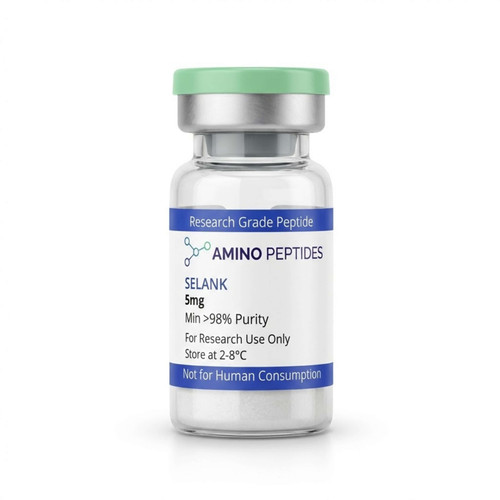
-
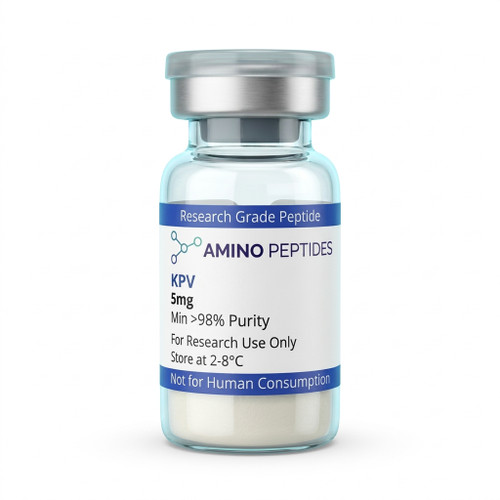
KPV Peptide | 5mg & 10mg
From €30.02 -
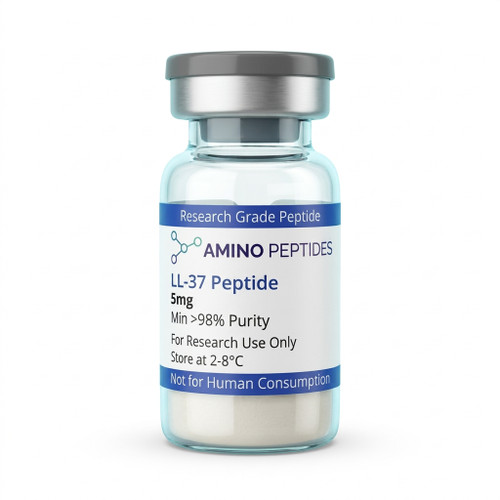
LL-37 Peptide | 5mg
€57.64
UK Buyer's Guide to KPV, LL-37 and Antimicrobial Research Peptides
This page lists peptides used in innate-immune and antimicrobial cell work. KPV is three amino acids, lysine, proline, and valine, from the end of alpha-MSH. It is sold at 5mg and 10mg. LL-37 is a piece of the cathelicidin protein, sold at 5mg, and is used in antimicrobial cell assays. They are separate vials, each with its own product page and its own Certificate of Analysis. Selank is a tuftsin analogue. It is listed here as well as on the cognitive page, because tuftsin-related peptides are used in innate-immune work too. KLOW is an 80mg blend that adds KPV to GHK-Cu, BPC-157, and TB-500. Order the standalone KPV vial when the work needs only that tripeptide. Thymosin Alpha-1, VIP, and Ara-290 are names in this literature, but they are not stocked on this page. The stocked lines are KPV, LL-37, Selank, and the KLOW blend.
KPV at 5mg suits a small series. The 10mg vial suits a longer one. LL-37 is a 5mg listing, so a larger panel means more vials. Selank stays a 5mg vial with its own paperwork. Read the Certificate of Analysis before you open LL-37, because the assay needs that exact chain. Every peptide batch is checked at 99% purity or higher by HPLC. The Certificate of Analysis is on the product page, so you can read the result before you open the vial. In-stock lines are packed for Mon–Fri same-day UK dispatch before 12PM. A freeze-dried vial has had its moisture pulled out under vacuum, so it stays stable at room temperature while it is in the post. At home, keep the sealed vial in a standard household refrigerator at 2°C–8°C, in a cool dark place, for 12 to 24 months. A laboratory deep-freeze is only for multi-year warehouse storage, not for a normal order. Once the vial is mixed with sterile bacteriostatic reconstitution solution (0.9% benzyl alcohol), store that liquid in the refrigerator at 2°C–8°C and away from light. The 0.9% benzyl alcohol limits bacterial growth when the same vial is drawn from more than once, and the cold keeps the peptide structure intact. Do not refreeze a vial after it has been mixed.
| Compound | What it is | Analytical Purity | Catalogue Page |
|---|---|---|---|
| KPV | Lys-Pro-Val tripeptide, innate-immune cell models | ≥99% HPLC | KPV |
| LL-37 | Cathelicidin fragment, in-vitro antimicrobial assays | ≥99% HPLC | LL-37 |
| Selank | Tuftsin analogue, also listed for cognitive assays | ≥99% HPLC | Selank |
| KLOW blend | GHK-Cu, BPC-157, TB-500 and KPV, 80mg | ≥99% HPLC | KLOW blend |
Research FAQ