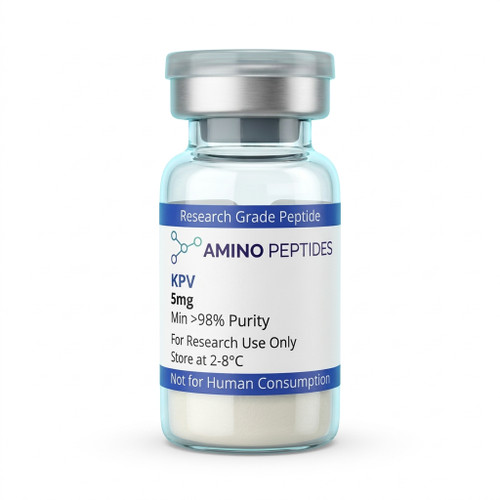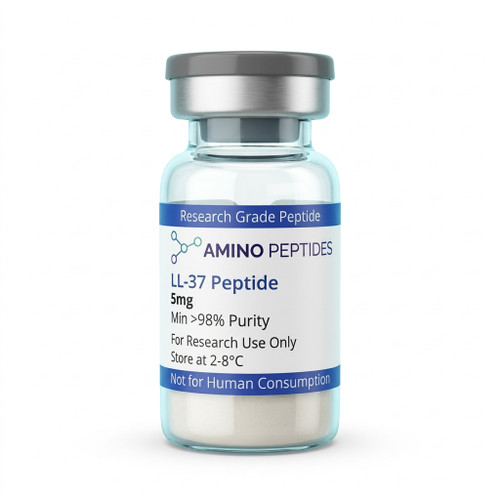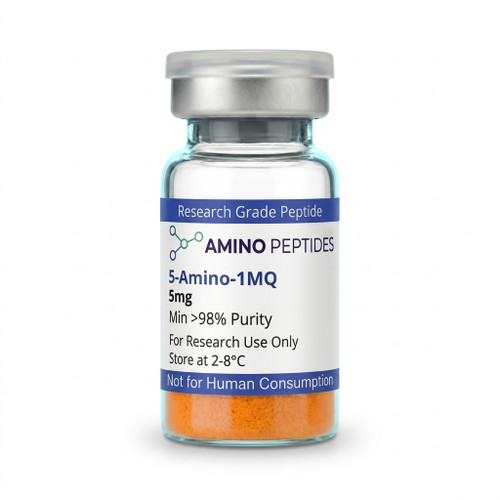


Dilute Acetic Acid 0.6% is a specialised solvent frequently utilised in advanced laboratory settings to dissolve peptides that require a lower pH environment. Following complex peptide synthesis, researchers often encounter compounds that are insoluble in standard neutral buffers. By adjusting the pH, this acidic solution ensures complete dissolution and helps maintain long-term molecular stability during cellular assays. As a premium research chemical, UK laboratories utilise this solvent to standardise their reconstitution protocols, preventing peptide degradation and aggregation before in-vitro testing. The exact concentration of 0.6% is carefully calibrated to protonate specific amino acid residues without causing structural denaturation, a concept closely related to specific pH monitoring in advanced biochemical assays. For detailed chemical properties, researchers can consult PubChem to understand its interaction with basic peptide structures.
Research trends often mention the search phrase 'healing' when discussing the primary compounds typically dissolved in 0.6% acetic acid. Current literature summarises these papers as observations in isolated cellular models, focusing on molecular stability rather than consumer applications. Amino Peptides supplies this compound only as a lyophilised laboratory reagent. Strictly for laboratory research.
- Interacts with protonatable amino acid residues (e.g., histidine, arginine, lysine) to disrupt intermolecular electrostatic interactions in lyophilised macromolecular structures.
- Modulates the isoelectric point (pI) microenvironment of target sequences, facilitating enhanced solvent accessibility in cell-free environments.
- Acts as a primary proton donor in aqueous laboratory models, preventing the aggregation of hydrophobic peptide domains during initial solvation.
- Lowers the local pH of the solvent matrix to approximately 2.5-3.0, driving the protonation of basic side chains and enhancing electrostatic repulsion between peptide monomers.
- Disrupts transient beta-sheet formations in lyophilised cakes, accelerating the transition from solid-state to fully solvated monomeric forms.
- Maintains molecular stability of acid-stable sequences by inhibiting spontaneous oxidation and hydrolysis in isolated laboratory experiments.
- Provides a sterile, acidic microenvironment that suppresses microbial proliferation in extended cell-free storage protocols.
Technical Specifications
Variant Breakdown
- 10ml Vial: Provides an optimal volume for multiple reconstitution cycles, ensuring precise pH control and adequate solvent supply for laboratory peptide stock preparation.
Quality Assurance
- Sterile Filtration: Processed through 0.22-micron filters to ensure the complete absence of particulate matter and microbial contaminants.
- Concentration Verification: Titration and analytical testing confirm the exact 0.6% acetic acid concentration for reproducible pH adjustment.
- Endotoxin Testing: Rigorously screened to maintain endotoxin levels below <0.5 EU/mg, safeguarding sensitive in-vitro cell cultures.
- Chemical Purity: Formulated using analytical grade glacial acetic acid and ultrapure laboratory water to prevent elemental interference in biochemical assays.
Research Mechanism
- Protonates specific basic amino acid residues, such as histidine and arginine, increasing the overall polarity and aqueous solubility of the peptide.
- Disrupts intermolecular hydrogen bonding that typically leads to peptide aggregation and precipitation in neutral aqueous environments.
- Maintains a stable, mildly acidic pH gradient that prevents rapid hydrolysis and oxidative degradation of sensitive peptide bonds during in-vitro storage.
- Facilitates uniform concentration distribution within cellular culture media, ensuring consistent receptor binding during laboratory assays.
Reconstitution & Storage Data
| Vial Strength | Solvent Added | Resulting Concentration |
| 10ml | 1 mL Bacteriostatic Reconstitution Solution | 10.00 mg/mL |
| 10ml | 2 mL Bacteriostatic Reconstitution Solution | 5.00 mg/mL |
- Lyophilised (Powder): Store in a standard refrigerator (2-8°C) for up to 3 months. For long-term preservation, freeze at -20°C.
- Reconstituted (Liquid): Store at 2-8°C (Refrigerated).
Scientific References
Journal of Biological Chemistry: "Effects of pH on Peptide Solubility and Aggregation in In-Vitro Assays" View Study
Analytical Biochemistry: "Optimization of Solvents for the Reconstitution of Basic Peptides" View Study
Peptide Science: "Structural Stability of Lyophilised Peptides in Dilute Acidic Environments" View Study
International Journal of Pharmaceutics: "Influence of Acetic Acid Concentration on the Dissolution Kinetics of Hydrophobic Peptides" View Study
Biochemical Journal: "Protonation States of Amino Acid Residues in Dilute Ethanoic Acid" View Study